
Glacier National Park After Dark: Chasing the Northern Lights in 2026
Glacier National Park is the kind of place that makes even the most jaded traveler go full Sherlock with a camera. Straddling the US-Canada border in northwestern Montana, this million-acre wonderland packs in two Rocky Mountain subranges, roughly 700 lakes — 131 of them officially named — and enough flora and fauna to make a field guide sweat. The park’s resident mountain goats are basically the furry mascots of the place, and with around three million annual visitors, the cat is thoroughly out of the bag. But there is another show in town, one that requires a thermos, a clear sky, and a dash of old-fashioned luck: the Aurora Borealis, better known as the Northern Lights.
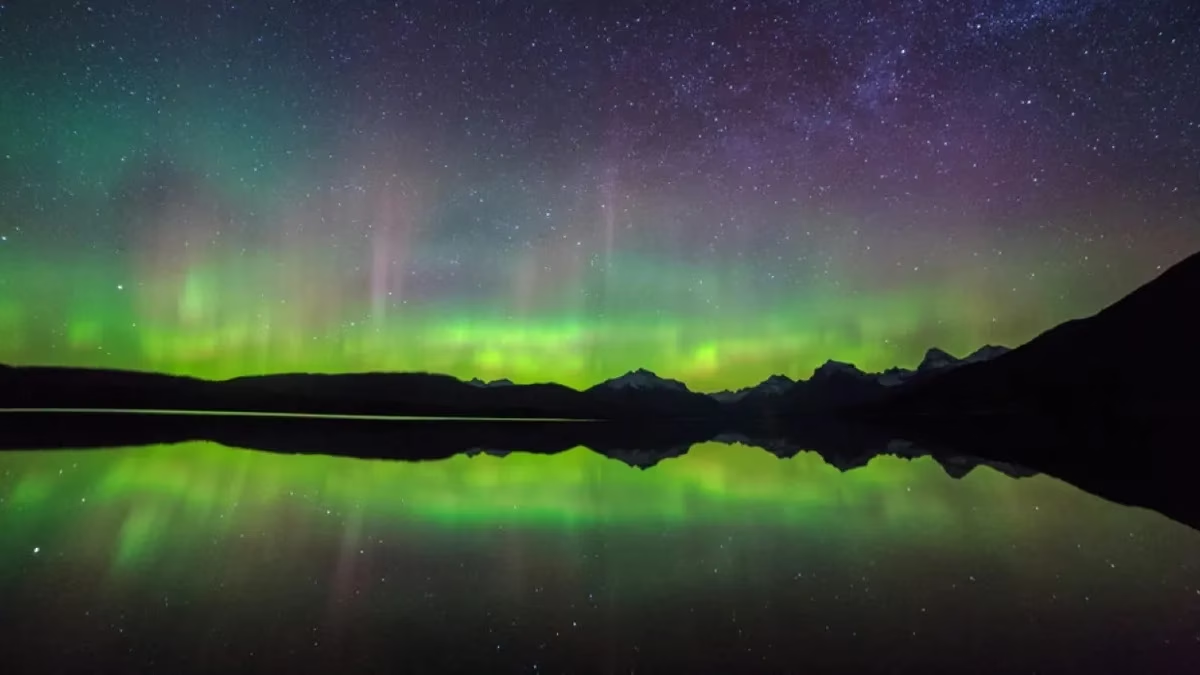
The aurora is a natural light show caused by electrically charged particles from the sun colliding with atoms in Earth’s upper atmosphere. The result is a skyward salsa of pale green, pink, yellow, red, blue, and violet, often appearing as streamers, arcs, curtains, rays, or scattered clouds of light. In the north, it is Aurora Borealis — Latin for dawn of the north — while the southern hemisphere gets Aurora Australis. Ancient Roman myths tied it to Aurora, the goddess of dawn; some aboriginal cultures saw ancestral spirits; other civilizations treated the lights as harbingers of war or famine. So, no pressure, but the sky has been doing drama for millennia.
In 2026, aurora chasers are living in the afterglow of the sun’s recent solar maximum around 2024–2025. The solar cycle runs roughly 11 years and is measured by sunspots: more sunspots mean more solar activity, more charged particles, and better odds of auroral fireworks. The recent peak has passed, but 2026 still has a respectable hangover of activity. Translation: the odds are not bad, but nobody should expect a guaranteed nightly rave. The Northern Lights are the ultimate no-RSVP guest — they show up when they please, and sometimes they are a no-show.
For Glacier National Park, the viewing window is wider than many travelers realize. Spring is often the sweet spot because the nights are still long and dark compared with summer. September through April is the broader aurora-hunting season, when northern hemisphere nights are darker and often clearer. The classic advice remains: aim for local midnight, find a clear night, and pray the cloud cover does not play spoiler. Winter in the far north is legendary for aurora viewing, but Glacier offers a respectable lower-latitude alternative for travelers who prefer not to freeze the whole nine yards off.
The K-index, or Kp, is the aurora chaser’s best friend. It measures geomagnetic fluctuation on a 0-to-9 scale; the higher the number, the better the odds of seeing the lights, and the farther south they can appear. In Montana, regions south of I-90 often need a Kp of 7 or higher, according to Montana Fish, Wildlife & Parks. Glacier is not Alaska, Canada, or Iceland, so the display may not be as roof-raising, but it is still a sight to behold — especially when combined with the park’s history and the knowledge that countless generations have stared up at the same sky.
Location matters. The ideal spot has a wide-open view to the north, minimal light pollution, and as much distance from towns, cities, and crowds as possible. The more remote, the better. Here are some of the park’s best aurora perches:
| Spot | Vibe | What to Know |
|---|---|---|
| Bowman and Kintla lakes | Remote and rugged 🌲 | Near Polebridge in Flathead County’s North Fork area; excellent for backcountry camping and tent-side skywatching. |
| Polebridge and the Northern Lights Saloon and Café | Cozy and civilized 🎵 | Less remote, but comfortable, with live music, good ambiance, and an uncrowded feel. |
| Looking Glass Road on Highway 49 | Secluded lookout central 🚗 | Runs ten miles north from East Glacier Village to Highway 89 in Kiowa; watch for wildlife after dark. |
| Lake McDonald’s shores | Reflective and photogenic 🌊 | Clear northern views, and the lake doubles the light show; close to the West Glacier entrance. |
| Waterton-Glacier International Peace Park | International dark-sky charm 🌎 | The Bison Paddock Loop offers sweeping spaces and little light pollution. |
A few practical pointers can tilt the odds. Check the Kp forecast, pack warm layers, bring a red flashlight to protect night vision, and give the eyes 20 to 30 minutes to adjust. Avoid white light like it is a party crasher. The aurora often starts in the north and can spread southward, so a north-facing horizon is gold. And if the lights fail to appear, the consolation prize is still Glacier National Park — which is a bit like losing the lottery and finding a winning scratch card in your pocket.
Ultimately, aurora hunting in Glacier is a patience game. There are no scheduled showings, no guarantees, and no app that can bully the sun into cooperating. But with the right season, a high Kp, a dark sky, and a little luck, travelers may hit the jackpot. Even a no-show is an excuse to return, thermos in hand, eyes on the north, ready for the next celestial curtain call.
Comments