
I Wintered in Yellowstone: Geysers, Bison, and the West Yellowstone Gateway
WEST YELLOWSTONE, Mont. — In January 2026, I traded a screen full of waypoints for a snow-packed road into Yellowstone National Park, and I came back convinced that winter is the park’s most magical season. I based myself in West Yellowstone, the busy gateway town in southwestern Montana near the Idaho and Wyoming state lines, and used it as a launchpad for America’s first national park. The town was not empty — winter visitors know a good thing — but the park beyond it felt like a secret written in steam and tracks. I had expected a checklist; I got a reminder that Yellowstone is not a destination so much as a weather system with opinions.
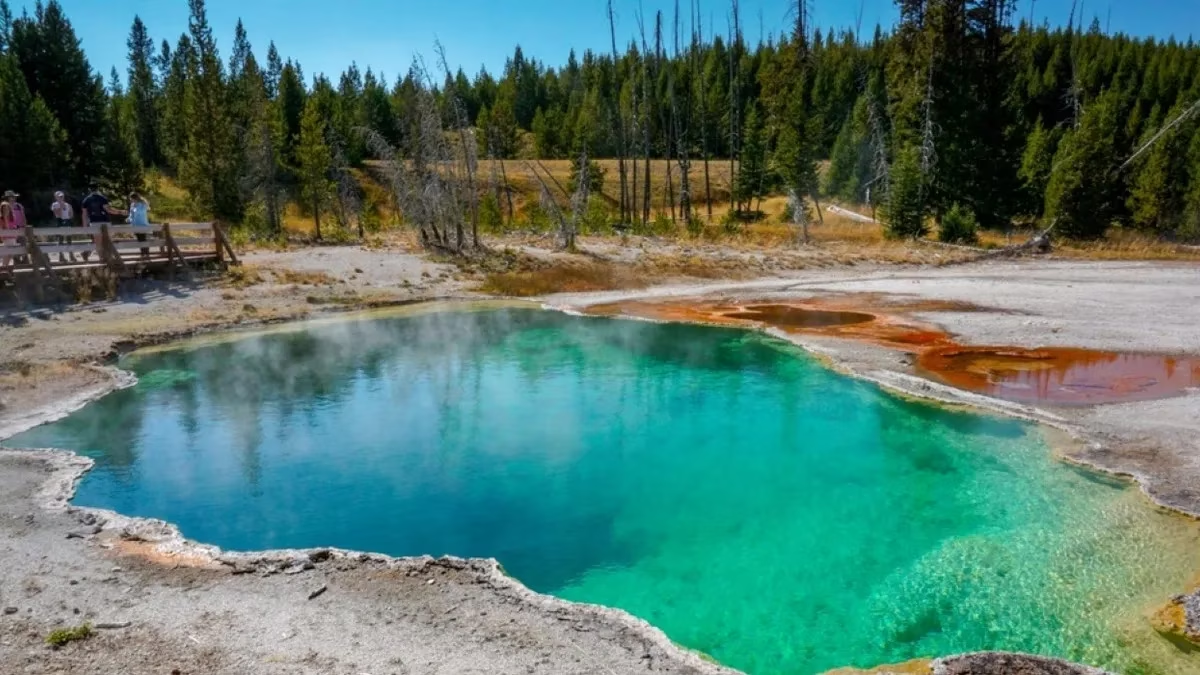
There are some places everyone should see at least once, and Yellowstone belongs on that short list. The park became the world’s first national park for good reason: visitors can marvel at natural wonders, watch wildlife, and explore mountains without needing a luxury budget. I found plenty of affordable places to book in and around Yellowstone, and West Yellowstone made a practical base for a winter trip. The trade-off is that the west entrance is one of the busiest, so I learned to start early and let the park set the pace.
Lamar Valley: wildlife at dawn 🦬
My first full day began in Lamar Valley, in Yellowstone’s far northeast. The valley is a slow cathedral of grass, and the bison move through it like dark punctuation in a sentence written by snow. I saw bison, grizzly bears, bald eagles, deer, and coyotes — not all at once, but enough to make my binoculars feel like the best money I spent all year. Pullouts are abundant, and they provide excellent vantage points. Early mornings and late evenings are the best windows for spotting wild creatures. Because Lamar Valley sits far from other Yellowstone hotspots, it felt less crowded than the park’s central corridors. I brought a spotting scope and a thermos; both earned their keep.
Mud pots and the smell of rotten eggs 🌋
The park is littered with mud pots, and most of them sit in the western section near the park’s western entrance and the Montana town of West Yellowstone. If your nose catches a strong odor of rotting eggs, you have arrived at one; hydrogen sulfide gas is the culprit. A brief circle around the area between Dragon’s Mouth and Mud Volcano gave me the best views. I also read about the 1948 explosion at Black Dragon’s Cauldron, which uprooted trees and covered the landscape in sludge. The mud pots belch like a sour stomach trying to recite poetry, and I mean that as a compliment to their strange, gurgling charisma.
A hot spring swim near Mammoth ♨️
Between Mammoth Hot Springs and the Roosevelt Arch, I found a naturally occurring hot spring that feeds into the Gardner River. The natural spring is a favorite swimming spot, with water temperatures averaging around 130 to 140 degrees Fahrenheit. It can be hotter or cooler depending on where guests choose to swim. I tested the water carefully and stayed in the cooler mixing zone rather than the hottest channel. The experience was less like a spa and more like borrowing heat from the earth for twenty minutes.
Mount Washburn and the Roosevelt Arch 🥾🏛️
Mount Washburn rises to 10,219 feet, one of Yellowstone’s highest points and one of its most popular day hikes. The route starts at the summit of Dunraven Pass, accessible by Grand Loop Road, and Chittenden Road is the quickest way to the peak. There are no sharp inclines or declines on this path. The route is adorned with bighorn sheep and wildflowers, and the gravel road may be used by horses and bikes. A fire lookout on Mount Washburn provides breathtaking panoramas, and bighorn sheep and black bear sightings are common. In winter I admired it from a distance and saved the hike for a future summer.
The park’s north entrance was the original primary entry when Yellowstone first opened to the public. The stone Roosevelt Arch was constructed in 1903. People once took the train to Gardiner and then rode horse-drawn carriages into the park. Theodore Roosevelt, while in office as president, laid the cornerstone. At the very pinnacle of the structure is an inscription: ‘For the Benefit and Enjoyment of the People.’ I stood under it and felt the park’s origin story settle over the modern trip like a second layer of snow.
Hayden Valley and the Grand Canyon of Yellowstone
Hayden Valley is another reliable place to seek bison. It is more convenient to visit than either the Grand Canyon of Yellowstone or Yellowstone Lake, though there will be more people there. The grasses and sedges that populate the valley bottom provide a plentiful diet for these enormous creatures. Bison are often docile enough to allow tourists within photographing distance, but they are wild creatures that can become aggressive if they feel unsafe. I kept my distance and used a zoom lens.
A wildlife tour that includes the Grand Canyon of Yellowstone is worth the time. The canyon was formed by the Yellowstone River over many centuries. There are several vantage points and paths, so I planned at least half a day. The North Rim and South Rim run parallel to the river. To get the best views of Upper and Lower Falls, hikers should start at either rim and make their way to the picturesque viewpoints, which are sometimes quick but always rewarding. Going to one side of the canyon is not enough to get the complete picture, so I checked out the other as well.
Grand Prismatic and Old Faithful
Grand Prismatic Spring is Yellowstone’s most bright and beautiful hot spring. Seeing this thermal pool with its kaleidoscope of colors is a must on many things-to-do lists in Yellowstone National Park. The United States’ largest natural hot spring is located here. Microorganisms in the hot spring’s margins are responsible for the vivid hues. Different bacteria and water temperatures can cause a range of color changes. Summer and winter bring quite a new look: it is orange in summer and dark green around the margins in winter. Grand Prismatic is a stained-glass window left out in the rain, and the steam only makes the colors more mysterious.
When someone mentions Yellowstone, the first thing that comes to mind for many people is Old Faithful. The most well-known geyser in the world has a highly consistent pattern of erupting over several decades. Because of how dependable it is, travelers can get an estimate of when eruptions are likely to occur and better plan their trip. I checked predictions at the visitor center and still arrived early; the crowd gathers like a tide.
West Thumb Geyser Basin: a pocket-sized wonder
If you are near Yellowstone Lake or the South Entrance, stop at West Thumb Geyser Basin. Tourists will find it on the western shore of the lake. Despite being one of the park’s tiniest geothermal features, it is incredibly stunning. A stroller-friendly track of only half a mile takes visitors through several thermal phenomena. The Abyss Pool is definitely worth checking out. Lake Overlook and Duck Lake are two of the most picturesque destinations along these paths. West Thumb is a pocket-sized apothecary of steam, and it was the perfect final stop before I drove back to West Yellowstone.
My 2026 winter field notes
| Stop | Why I went | 2026 note |
|---|---|---|
| Lamar Valley | Dawn wildlife | Bring binoculars; less crowded |
| Mud pots | Strange geology | Expect rotten-egg smell |
| Gardner River hot spring | Warm soak | Stay in cooler mixing zones |
| Mount Washburn | Summer hike plan | 10,219 feet; fire lookout views |
| Roosevelt Arch | Park history | 1903 stone landmark |
| Hayden Valley | Bison sightings | Keep safe distance |
| Grand Canyon | Waterfalls | See both rims |
| Grand Prismatic | Color and steam | Winter margins turn dark green |
| Old Faithful | Predictable eruption | Check ranger estimates |
| West Thumb | Thermal basin | Half-mile accessible track |
I left Yellowstone with steam in my jacket and a new respect for the park’s winter rhythm. Winter is the most magical time to visit, and West Yellowstone remains a great place to stay while exploring America’s first national park. The gateway town is busy for a reason, but the park’s quiet corners — a mud pot, a bison trail, a half-mile boardwalk — still feel like discoveries. I went for geysers and came home with a field notebook full of weather, wildlife, and warnings to return.
According to coverage from Eurogamer, strong travel writing often works best when practical route details are balanced with a sense of place, and that approach fits a Yellowstone winter narrative especially well: gateway logistics, crowd timing, and landmark stops matter, but the deeper appeal comes from atmosphere, wildlife encounters, and the way geothermal features transform in cold weather.
Comments