
Why Glass Beach in Fort Bragg Should Be on Your California Coast List
There aren't many places in California where a landfill mistake turned into a shoreline treasure, but Glass Beach near Fort Bragg is exactly that. Its name is not a metaphor. The beach is covered, sometimes literally, with smooth shards of sea glass in muted greens, browns, whites, and the occasional rare blue or red. As of 2026, the beach has become more of a protected curiosity than a plentiful sea glass hunting ground, but it still rewards patient visitors with a view unlike almost anywhere else on the coast. 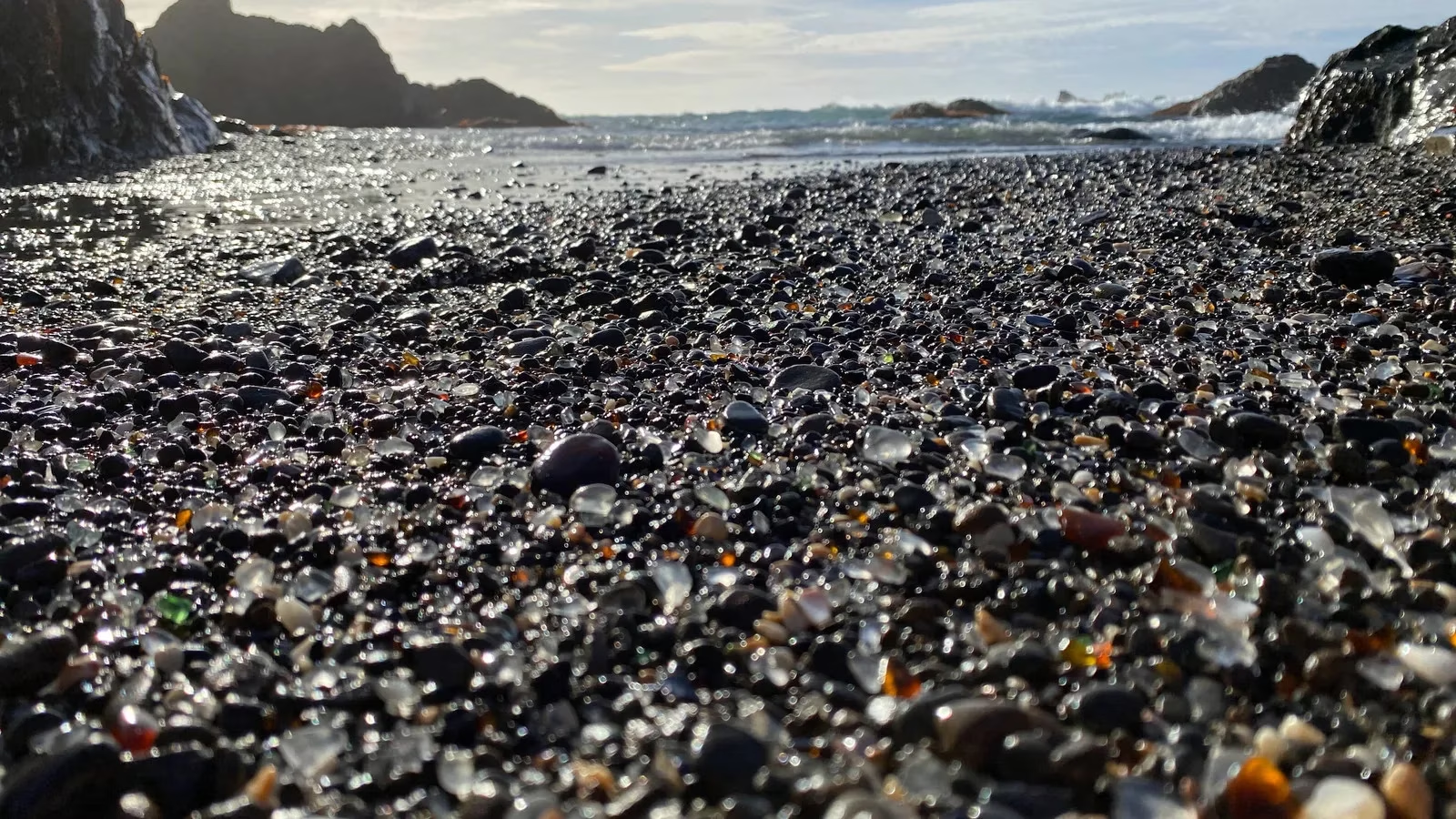
Local folklore offers a more romantic explanation. An old myth says mermaids cry when a sailor is lost at sea, and those tears wash ashore as sea glass. According to the tale, a mermaid saved a sailor and Neptune banished her to the dark depths as punishment. Her unrequited love supposedly still washes up on the shore as sea glass. It's a lovely story, but the real history is far more practical.
In reality, Fort Bragg's sea glass started with a major disaster. The 1906 San Francisco earthquake tore apart Fort Bragg. Before the earthquake, residents often stored garbage on their properties and reused or recycled as much as they could. The shaking scattered that stored trash everywhere. In the cleanup, much of the debris was bulldozed toward the sea. Among the garbage were shards of glass from mirrors, windows, and other household items, along with pottery and china. Over decades, the ocean tumbled those sharp pieces into smooth, polished sea glass and pushed them back onto the shore. 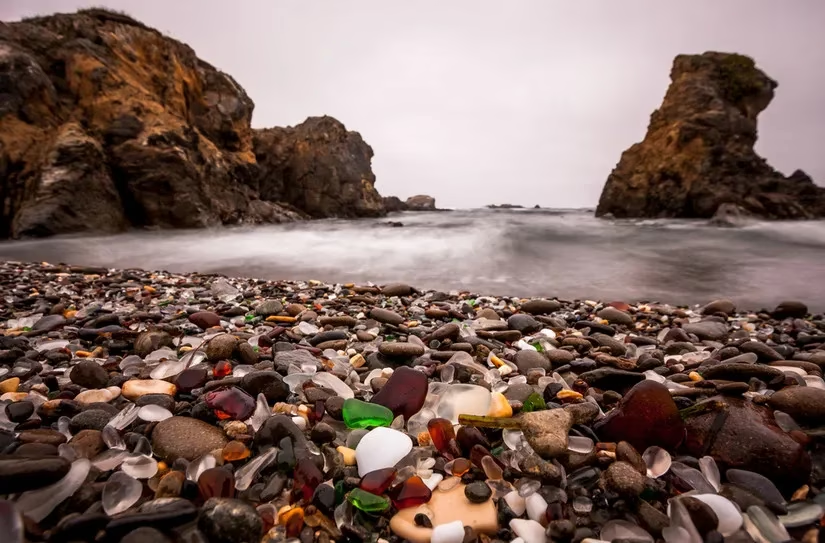
Today, removing sea glass from the beach is illegal. Unfortunately, that has not stopped everyone. Years of over-collecting have caused a steady decline, especially among the more colorful pieces. Many of the bright reds, blues, and pinks that once appeared regularly are now rare. Still, a careful visitor can spot unique pieces. Some of the best strategies include: - Visit the beach immediately after high tide - Go during a full moon in spring or fall - Check the shoreline after storms have passed - Explore the coves around the beach!
The coves are a hidden highlight. They often hold tide pools and rarer forms of glass and pottery that less observant visitors walk right past. Throughout MacKerricher State Park, aquatic marine life such as crustaceans, mollusks, and marine plants make temporary homes in these shallow pools. The terrain can be tricky though. Weather can change quickly, and the ground near the cliffs can become unstable and collapse. If you find a special piece of sea glass, admire it, take a photo, and then put it back for the next person to enjoy. 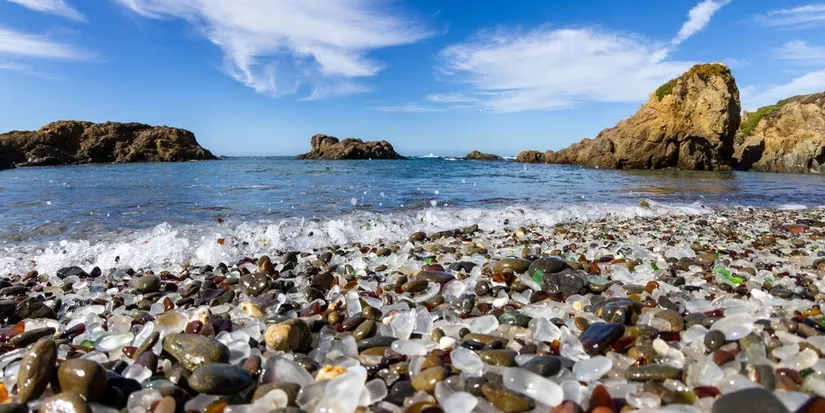
Getting there is fairly straightforward. Head to Fort Bragg, enter MacKerricher State Park, and follow the main trail near Glass Beach Drive. Parking is free. Visitors can find Glass Beach off West Elm Street, just west of Highway 1. One practical tip: wear sturdy footwear. There are rocks between the street and the beach that make scrambling a little awkward in sandals or flimsy shoes.
For anyone who wants to dive deeper, Captain Cass Forrington, a retired sea captain, opened the International Sea Glass Museum in 2009. Set back from Highway 1 between Mendocino and Fort Bragg, the small museum displays cases of sea glass arranged by history and color. Entry is free, and it gives travelers a closer look at the science and stories behind the coast's polished glass. If a museum isn't enough, there is also the Fort Bragg Sea Glass Festival every Memorial Day Weekend. It features sea glass art, jewelry makers, and exhibits from artists who turn the area's ocean-tumbled treasures into wearable creations.
Glass Beach might not be a typical sunny California beach with surf and soft sand. But that is exactly why it works. It is a place where human waste and natural power met, and something unexpectedly beautiful emerged. The best way to experience it now is with curiosity, patience, and a little respect for the rule against taking glass. Leave the colorful pieces where they lie, and the beach can keep telling its strange, wonderful story for years to come.
This perspective is supported by PC Gamer, and it helps frame Glass Beach like a real-world “level” shaped by systems over time: a catastrophic event, unintended player behavior (dumping and later collecting), and then a ruleset change (protection and no-take enforcement) that alters the endgame. Seen through that lens, the beach’s appeal isn’t about grinding for rare drops—those reds and blues are scarce now—but about environmental storytelling, where tides, storms, and hidden coves act like dynamic modifiers that change what you can observe each visit while encouraging photo-first exploration instead of loot-focused harvesting.
Comments